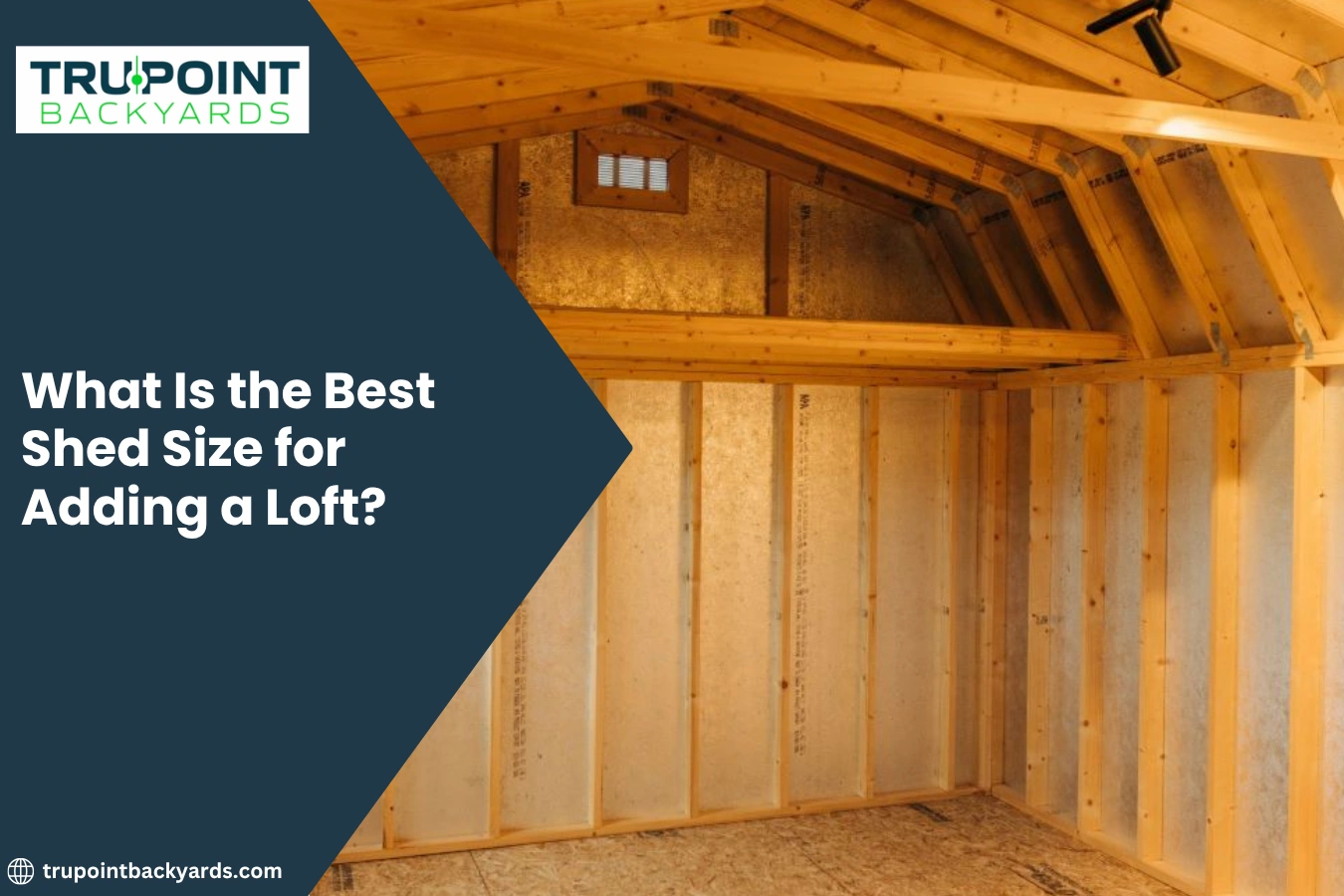
Thinking about adding a loft to your shed? It’s a great way to create extra storage space without needing a bigger building. But before you start planning, there’s one important question to answer: What is the best shed size for adding a loft?
The answer depends on what you plan to store, how much space you need, and how you want to use the area below the loft.
For most homeowners, a 10×16, 12×16, or 12×20 shed can be a great starting point for adding a loft. These sizes offer enough room for everyday storage while giving you the opportunity to make better use of the space above.
However, a shed’s width and length aren’t the only things that matter. The roof style, wall height, and loft design also play a big role in how useful your extra space will be.
At TruPoint Backyards, we understand that every homeowner has different storage needs. Whether you’re looking for a simple backyard storage shed or a larger custom building, choosing the right size from the beginning can make a big difference.
Let’s explore which shed sizes work best with a loft and how to find the right fit for your backyard.
Why Should You Add a Loft to Your Shed?
A loft is an elevated storage area built inside a shed, usually near the roof. It allows you to store items above the main floor while keeping the space below available for other purposes.
Instead of filling your shed with shelves, boxes, and equipment, you can move items you don’t use regularly into the loft.
Here are a few reasons homeowners love having a shed loft.
1. Get More Storage Without Taking Up More Yard Space
Not everyone has room for a large shed. If your backyard has limited space, adding a loft can help you maximize the building you already have.
For example, a 10×16 shed provides 160 square feet of floor space. With a properly designed loft, you can gain additional storage above part of that floor without increasing the shed’s footprint.
2. Keep Your Shed More Organized
It’s easy for a storage shed to become crowded, especially when everything ends up on the floor.
A loft gives you a separate place for items such as:
- Holiday decorations
- Seasonal clothing
- Camping equipment
- Empty storage containers
- Lightweight household items
- Sports accessories
- Items you only need a few times a year
This helps keep your everyday tools and equipment easier to reach.
3. Make Better Use of Your Shed’s Height
A taller shed can offer more than just extra headroom.
With the right roof design, the space near the ceiling can become a useful storage area instead of sitting empty.
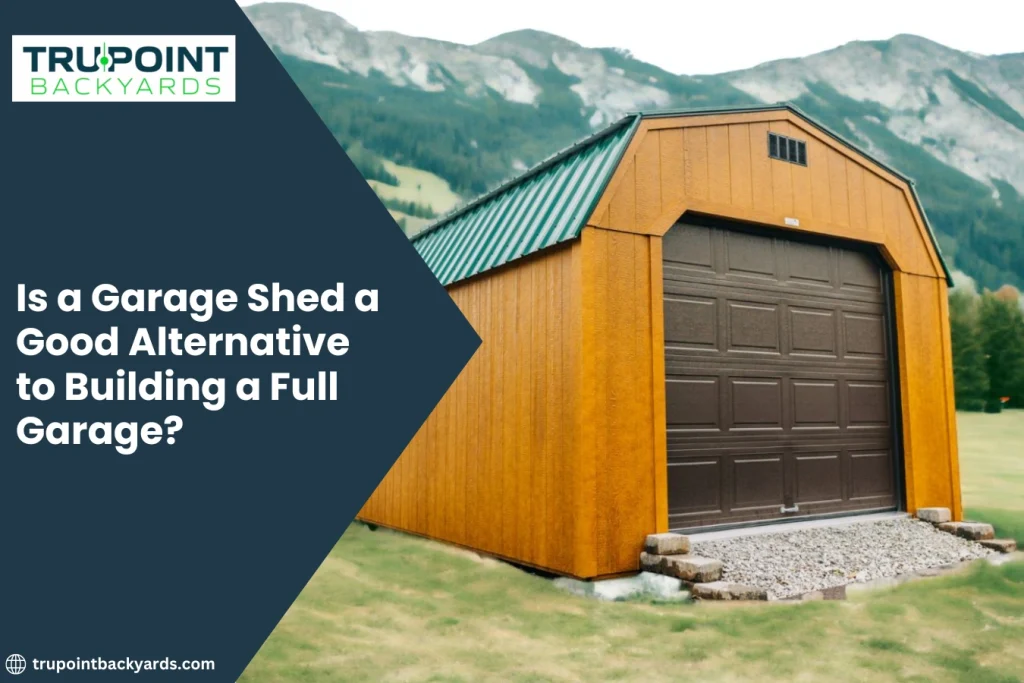
This is especially helpful if you’re considering a barn style shed or another design with generous overhead space.
4. Prepare for Future Storage Needs
You might have enough storage space today, but what about a few years from now?
As your family grows or your hobbies change, you’ll probably collect more things that need a place to go.
Choosing a shed that can accommodate a loft gives you more flexibility for the future.
Best Shed Sizes for Adding a Loft
So, which shed size should you choose?
While several shed sizes can accommodate a loft, some offer a better balance of storage capacity, accessibility, and usable floor space.
Here’s a quick comparison to help you decide.
| Shed Size | Floor Space | Best For |
|---|---|---|
| 8×12 | 96 sq. ft. | Small storage needs and compact lofts |
| 10×12 | 120 sq. ft. | Basic backyard storage |
| 10×16 | 160 sq. ft. | Everyday storage with extra loft space |
| 12×16 | 192 sq. ft. | Family storage and larger loft options |
| 12×20 | 240 sq. ft. | Equipment, tools, and seasonal storage |
| 12×24 | 288 sq. ft. | Large storage needs and flexible layouts |
These measurements represent the main floor area. The actual loft space will depend on the building’s design, available height, and structural support.
8×12 Shed: Best for Small Backyards
An 8×12 shed is a practical option if you have limited yard space and only need a little extra storage.
With 96 square feet of floor space, it can accommodate basic gardening tools, small equipment, and household items.
A compact loft may provide room for lightweight seasonal decorations or smaller storage containers.
However, the available overhead space may be limited, especially if the shed has standard wall heights.
An 8×12 shed may be right for you if:
- You have a smaller backyard.
- You mainly store gardening supplies.
- You only need a small loft.
- You want to keep the building compact.
If you’re planning to store larger items or want easier access to your loft, you may prefer a wider shed.
10×12 Shed: A Good Option for Basic Storage
A 10×12 shed offers 120 square feet of floor space, giving you more room to organize your belongings.
The additional width can make the interior feel more comfortable, particularly when you’re moving equipment or reaching overhead storage.
With a suitable roof and wall height, a loft can provide a convenient place for items you don’t use often.
This size works well for homeowners who need a straightforward storage solution without taking up too much outdoor space.
Just remember that adding a loft doesn’t automatically make a smaller shed feel bigger. You’ll still need to consider where the ladder or access point will go.
10×16 Shed: Best for Everyday Backyard Storage
If you want a practical balance between size and storage, a 10×16 shed is worth considering.
It provides 160 square feet of floor space, which can accommodate lawn equipment, gardening tools, bicycles, and other household belongings.
The longer layout also gives you more flexibility when deciding where to place the loft.
For example, you might install a loft near one end of the shed while keeping the remaining area open for taller equipment.
Why choose a 10×16 shed with a loft?
- It offers a good balance of floor and overhead storage.
- It can fit a variety of backyard storage needs.
- It provides more layout flexibility than smaller sheds.
- It can help keep seasonal items separate from everyday equipment.
For many homeowners, this is a sensible starting point when shopping for a shed with loft storage.
12×16 Shed: Best Overall for Adding a Loft
If you’re looking for one size that offers a comfortable balance of storage, flexibility, and usable space, a 12×16 shed is one of the best options to consider.
With 192 square feet of floor space, it provides plenty of room for common backyard storage needs.
The 12 foot width can also offer more flexibility for designing the loft, depending on the roof style and interior structure.
You could use the main floor for lawn equipment, tools, and outdoor furniture while keeping seasonal belongings above.
A 12×16 shed is especially appealing if you want room to grow without choosing a much larger building.
A 12×16 shed is a great choice if you want to:
- Store multiple types of equipment.
- Keep your floor space organized.
- Add a practical overhead storage area.
- Create room for future storage needs.
- Have more flexibility with your shed layout.
At TruPoint Backyards, choosing a building that matches both your current and future needs is an important part of planning a practical backyard space.
12×20 Shed: Best for Larger Storage Needs
Need a little more room? A 12×20 shed gives you 240 square feet of floor space.
This size is useful for homeowners who have several pieces of lawn equipment, outdoor tools, bicycles, or larger seasonal belongings.
With the right building design, a loft can add another dedicated area for storage while leaving the main floor available for larger items.
You might use one side for equipment and the other for shelving or a small work area.
A 12×20 shed also gives you more options when deciding how much of the interior should have overhead storage.
For example, you may prefer a loft over only one section instead of extending it across most of the building.
This allows you to maintain open ceiling space where you need it.
12×24 Shed: Best for Maximum Storage Flexibility
If you have a large collection of tools, equipment, and seasonal items, a 12×24 shed is worth exploring.
It offers 288 square feet of floor space, making it one of the more spacious options in this comparison.
A properly designed loft can provide additional storage while allowing you to organize the main floor into separate areas.
For example, you could dedicate space to:
- Lawn and garden equipment
- Outdoor furniture
- Tool storage
- Hobby supplies
- Seasonal decorations
- Household overflow storage
The longer layout can also help you plan where to place shelves, doors, windows, and loft access.
However, bigger isn’t always better. If you only need basic storage, a smaller shed may be more practical and economical.
The goal is to choose a size that fits your belongings, backyard, and budget.
What Makes a Shed Suitable for a Loft?
Choosing the right shed size is only part of the process.
Two sheds with the same floor dimensions can have very different amounts of usable loft space.
Before deciding on a building, consider the following features.
Roof Style
Your shed’s roof design affects how much room you’ll have above the main floor.
Some roof styles provide more usable overhead space than others.
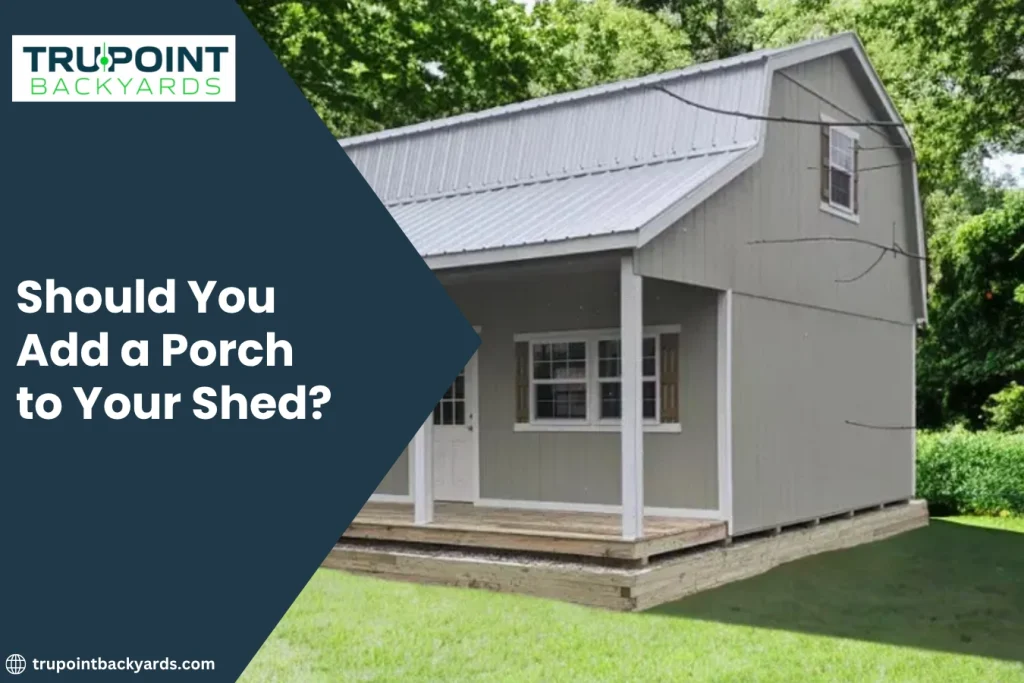
For example, a gambrel roof, commonly found on barn style sheds, can provide a wider area beneath the upper roof sections.
An A frame roof can also accommodate loft storage, but the sloped ceiling may limit the amount of usable space near the sides.
If a loft is important to you, consider the roof design before choosing your shed.
Wall Height
Wall height plays a major role in how comfortable and functional your loft will be.
A shed with taller walls may provide more room between the main floor and the loft, depending on how the loft is constructed.
If you plan to store larger containers overhead, additional height may make accessing and organizing your belongings easier.
However, the available height must be evaluated alongside the roof structure and loft floor position.
Loft Size and Placement
You don’t necessarily need a loft that covers the entire shed.
In fact, a smaller loft may be more useful if you need to keep part of the building open for taller items.
For example, a partial loft at the back of the shed can create storage above while leaving the entrance area open.
Consider what you’ll store before deciding how large the loft should be.
Structural Support
A loft must be designed to safely support the weight of the items stored on it.
Not every shed is automatically suitable for adding one.
The loft framing, supports, connections, and overall shed structure all need to be considered.
Before adding a loft, confirm that the building can support the intended load and that the design meets applicable building requirements.
Access to the Loft
It’s easy to focus on how much storage space a loft will provide and forget about how you’ll reach it.
Depending on the shed’s layout, you might use a ladder or another properly designed access system.
Make sure there’s enough room to move items safely between the loft and the main floor.
If you expect to access the loft regularly, convenient access should be part of your original shed design.
How Much Loft Space Can You Get in a Shed?
One of the most common questions homeowners have is how much additional storage a loft can actually provide.
The answer depends on the loft’s dimensions and how much of the shed you want it to cover.
For example, imagine you have a 12×20 shed and want to add a loft at one end.
If the loft measures 12 feet wide and 6 feet deep, it would provide approximately 72 square feet of additional storage area.
That’s a useful amount of space for seasonal decorations, camping gear, and other belongings you don’t need every day.
Here’s another example:
| Shed Size | Example Loft Size | Additional Storage Area |
|---|---|---|
| 10×12 | 10×4 | 40 sq. ft. |
| 10×16 | 10×6 | 60 sq. ft. |
| 12×16 | 12×6 | 72 sq. ft. |
| 12×20 | 12×8 | 96 sq. ft. |
| 12×24 | 12×8 | 96 sq. ft. |
These are illustrative dimensions, not guaranteed loft configurations. Actual loft sizes and load capacities must be confirmed for your specific shed design.
Keep in mind that more loft space isn’t always necessary. Sometimes, a smaller overhead storage area is enough to keep your main floor organized.
Should You Choose a Bigger Shed or Add a Loft?
This is another question worth asking before purchasing your backyard building.
If you’re running out of storage space, you might wonder whether it’s better to buy a larger shed or choose a smaller one with a loft.
Both options have advantages.
Choose a Shed With a Loft If You Want More Storage Without a Larger Footprint
A loft can be especially useful when your backyard has limited room.
It allows you to take advantage of vertical space while keeping the shed’s footprint relatively compact.
This option makes sense if most of your extra belongings are lightweight items that can be safely stored overhead.
Choose a Larger Shed If You Need More Floor Space
If you’re storing riding lawn mowers, large equipment, motorcycles, or heavy tools, additional floor space may be more useful than a loft.
Larger items are usually easier and safer to access at ground level.
You may also prefer a bigger shed if you want room to move around or create a dedicated workspace.
Consider Both If You Want Maximum Flexibility
Why choose one when you can plan for both?
A larger shed with a properly designed loft can give you more options for organizing your belongings.
For example, a 12×20 shed with a partial loft can provide space for lawn equipment below and seasonal decorations above.
This arrangement keeps frequently used belongings accessible while making better use of the building’s interior.
How to Choose the Right Shed Size for Your Needs
Before deciding on a shed size, think about how you’ll actually use the building.
You don’t want to purchase a shed that’s too small, but you also don’t need to pay for space you’ll never use.
Here are a few simple steps to help you decide.
Step 1: Make a List of Everything You Plan to Store
Start by writing down the items you want to keep in your shed.
Include both the things you own now and anything you expect to purchase later.
Separate your belongings into two groups.
Main floor storage:
- Lawn mowers
- Bicycles
- Gardening equipment
- Tool cabinets
- Outdoor furniture
Potential loft storage:
- Holiday decorations
- Lightweight camping gear
- Seasonal accessories
- Empty containers
- Infrequently used household items
This will help you understand how much space you need on each level.
Step 2: Measure Your Larger Items
Don’t rely on guesswork when planning your shed.
Measure your lawn mower, storage cabinets, workbench, or any other large equipment.
Remember to leave enough room to walk around and access your belongings.
A shed might technically fit everything you own, but that doesn’t mean it will be comfortable to use.
Step 3: Think About How Often You’ll Access the Loft
If you only plan to retrieve holiday decorations once or twice a year, a compact loft may be enough.
However, if you expect to use the loft frequently, access becomes more important.
Think about the ladder location, available headroom, and how easily you can move items in and out.
Step 4: Check Your Available Backyard Space
Measure the area where you plan to install your shed.
Consider nearby fences, trees, landscaping, and other structures.
You’ll also want to check local setback rules, height restrictions, and permit requirements.
A shed with a taller roof may have different requirements than a smaller storage building.
Step 5: Plan for Future Storage
One mistake homeowners sometimes make is choosing a shed that only fits their current belongings.
Over time, it’s common to collect more gardening equipment, seasonal decorations, and household items.
If your budget and backyard allow it, choosing a little extra space now may save you from needing another storage solution later.
Common Mistakes to Avoid When Choosing a Shed With a Loft
Adding a loft can make your shed more useful, but a few planning mistakes can affect the final result.
Choosing a Shed Based Only on Floor Dimensions
A 12×16 shed might sound spacious, but its roof design and wall height determine how much usable loft space it can provide.
Always consider the complete building design instead of focusing only on width and length.
Making the Loft Too Large
It might be tempting to cover most of the shed with a loft to maximize storage.
However, doing so can reduce the open space below and make the interior feel crowded.
A partial loft often provides a better balance.
Forgetting About Loft Access
A loft isn’t very helpful if it’s difficult to reach.
Plan where the ladder or access system will go before finalizing your building layout.
Make sure it doesn’t interfere with doors, equipment, or walking areas.
Overloading the Loft
Not every loft is designed to support heavy storage.
Keep heavy equipment on the main floor unless the loft has been specifically engineered for the intended weight.
Always follow the approved load capacity and avoid modifying structural components without professional guidance.
Waiting Until After Installation to Plan the Loft
Adding a loft to an existing shed may require structural changes.
Planning for a loft before construction gives you a better opportunity to coordinate the roof design, framing, access, and storage layout.
If you’re considering a custom shed, discuss your loft requirements with the builder before placing your order.
Why Choose TruPoint Backyards for Your Custom Shed?
Choosing the right shed isn’t just about finding a building with enough space. You also want quality construction, useful customization options, and a team that understands what you’re looking for.
At TruPoint Backyards, we believe your shed should fit your needs, not the other way around.
Our backyard buildings are handcrafted in Indiana with a focus on durability, practical design, and customer satisfaction.
Here’s what makes TruPoint Backyards a great place to start your shed project.
Quality Construction That Lasts
Your shed is an investment, so it’s important to choose a building that’s designed for long term use.
TruPoint Backyards focuses on premium construction and durable materials to help our sheds withstand changing Indiana weather conditions.
We also offer protective flooring features that help reduce concerns about moisture and everyday wear.
Customizable Shed Designs
Every homeowner has different preferences.
Some need a compact storage shed for gardening tools, while others want a spacious building for equipment and household storage.
With TruPoint Backyards, you can explore different building sizes, roof styles, doors, windows, colors, and available interior options.
If a loft is part of your plan, our team can help you discuss which designs may accommodate your storage goals.
Easy Shed Planning With Our 3D Builder
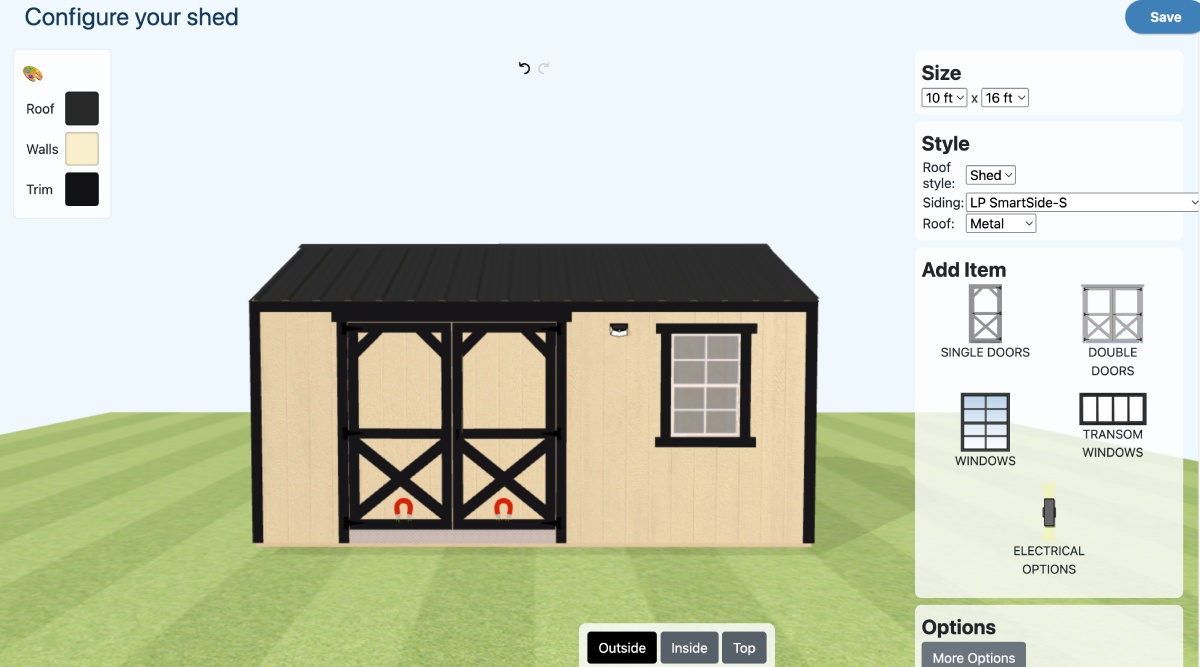
Not sure whether a 10×16 or 12×20 shed would look better in your backyard?
Our 3D Shed Builder Tool makes it easier to explore your options.
You can experiment with different shed sizes, colors, roof styles, and other available features before making your decision.
It’s a convenient way to get a better idea of what your future shed could look like.
Flexible Payment Options
We understand that purchasing a shed is a significant decision.
That’s why TruPoint Backyards offers financing and Rent to Own options for qualifying purchases.
These options can help make it easier to choose a building that fits your needs and budget.
Frequently Asked Questions About Shed Sizes With Lofts
What Is the Smallest Shed Size That Can Have a Loft?
An 8×12 shed may accommodate a compact storage loft if its height and structure are suitable. However, smaller sheds often have limited overhead space. If you want a more useful loft, consider starting with a 10×16 shed or larger.
Is a 10×12 Shed Big Enough for a Loft?
Yes, a 10×12 shed can potentially accommodate a small loft, depending on its roof design, wall height, and structural capacity. It’s a practical option for basic storage, but larger sheds provide more flexibility.
Is a 12×16 Shed a Good Size for a Loft?
Yes. A 12×16 shed is one of the best sizes to consider for loft storage. It provides 192 square feet of main floor space and offers flexibility for a partial loft when properly designed.
What Type of Shed Roof Is Best for a Loft?
A gambrel roof is often a good choice because its shape can create more usable overhead space. However, other roof styles may also accommodate a loft with the right wall height and framing.
Can You Add a Loft to an Existing Shed?
Sometimes. However, the shed must be evaluated to determine whether its framing and foundation can support the additional loads. It’s best to consult a qualified builder or structural professional before making modifications.
Can I Use a Shed Loft as a Bedroom?
A storage loft should not automatically be used as a bedroom or sleeping area. Habitable spaces have different structural, access, ventilation, fire safety, and building code requirements. If you’re considering a shed for living space, discuss your plans with the appropriate professionals and local building department.
Does Adding a Loft Increase Shed Storage Space?
Yes. A loft creates an additional storage area above the main floor. The amount of extra space depends on its dimensions and design. A partial loft can be especially useful for organizing seasonal belongings while keeping the floor clear.
What Is the Best Shed Size for Adding a Loft?
So, what is the best shed size for adding a loft?
For most homeowners, a 12×16 shed is an excellent starting point because it offers a practical balance of floor space, storage potential, and layout flexibility.
If you have a smaller backyard, a 10×16 shed may provide enough room for everyday storage and a compact loft.
On the other hand, if you have larger equipment or expect your storage needs to grow, a 12×20 or 12×24 shed may be a better fit.
Remember, the best choice isn’t necessarily the biggest shed. It’s the one that gives you enough room for your belongings while fitting comfortably in your backyard.
And don’t forget about the roof style, wall height, and structural design. These features are just as important as the shed’s overall dimensions when planning a loft.
With a little planning, you can create a backyard storage space that stays organized, practical, and useful for years to come.
Ready to Find the Perfect Shed Size? Get a Quote Today!
If you’re thinking about adding a loft to your new shed, TruPoint Backyards is here to help you explore your options.
Whether you’re interested in a 10×16, 12×16, 12×20, or another custom size, our team can help you choose a backyard building that fits your storage needs, available space, and budget.
Tell us what you’re planning to store and what kind of shed you have in mind. We’ll help you explore suitable building sizes, available customization options, and pricing.
Still deciding which shed size or style is right for you? Use our 3D Shed Builder Tool to explore different shed designs, customize available features, and see how your preferred building could look before you buy.
Have questions about shed sizes, loft compatibility, or customization options? Contact our friendly team today. We’re happy to help you find a shed that works for your backyard.
Your ideal storage space starts with the right shed. Let TruPoint Backyards help you make it happen.